
Heat Pump vs. Gas Furnace in Las Vegas: An Honest Comparison
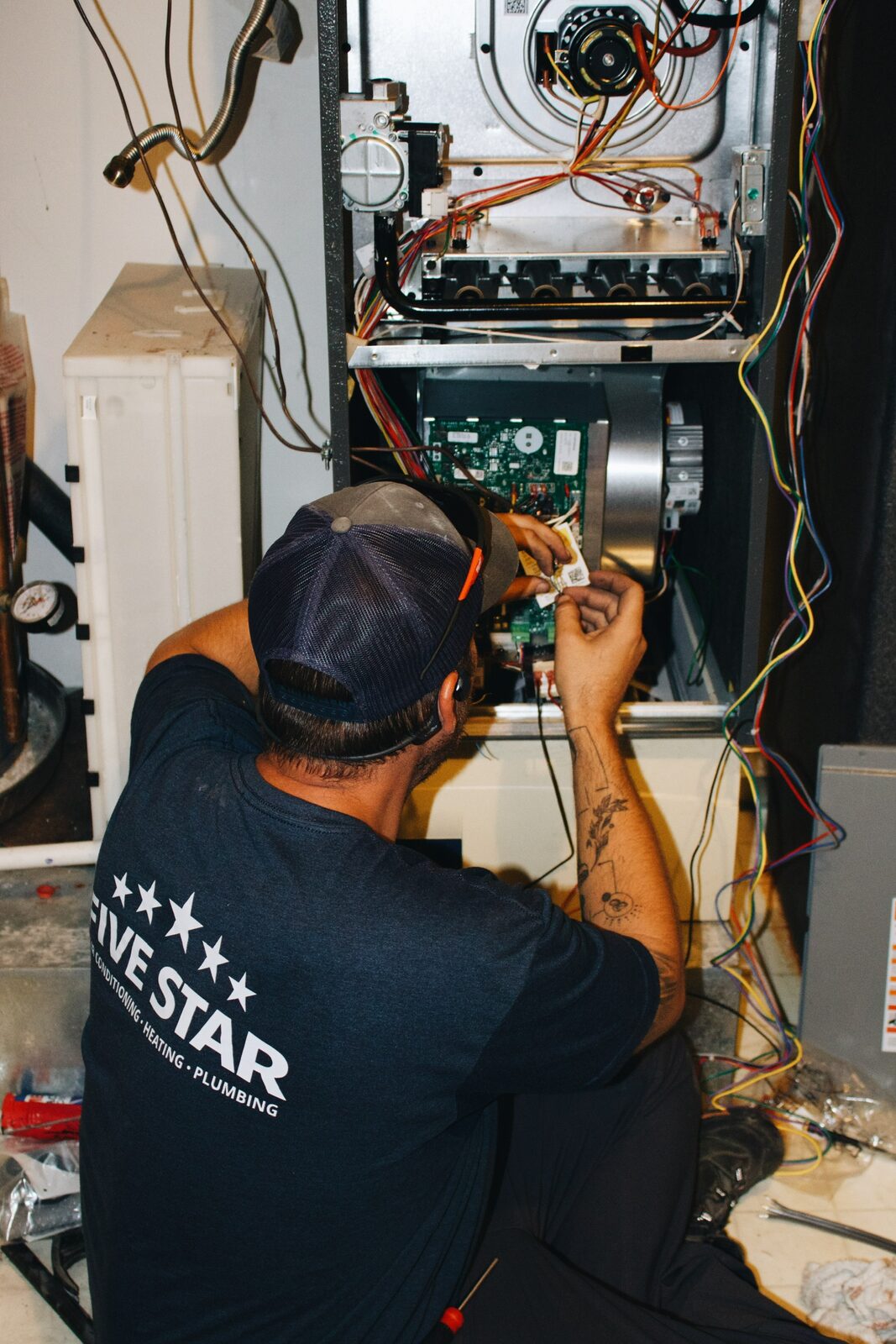
Every fall, as the first cold nights roll into the Las Vegas valley, we get the same question on service calls: should I replace this old furnace with another furnace, or switch to a heat pump?
The honest answer is that it depends on your house, and anyone who gives you a one-word answer before looking at your system is guessing. What we can do is walk you through how each option behaves in our climate, what actually drives the monthly cost, and how to tell a good quote from a sales pitch.
We install and service both heat pumps and gas furnaces, and our techs are paid hourly, not on commission. Nobody at Five Star Mechanical earns more if you pick one over the other. That's the lens for everything below.
The short version for most Las Vegas homes
Las Vegas winters are mild. Daytime highs usually sit in the 50s and 60s, and hard freezes are short and infrequent. That matters because a heat pump is at its most efficient in exactly that kind of weather, which is why so many homes across the valley already have one.
A heat pump also replaces your air conditioner. It's one outdoor unit that cools all summer and heats all winter. So the real comparison usually isn't "heat pump vs. furnace." It's "heat pump vs. furnace plus an AC."
How a heat pump heats, and why our climate suits it
A gas furnace makes heat by burning fuel. A heat pump moves heat: in winter it pulls warmth out of the outdoor air and brings it inside, the same way your AC moves heat out in summer. Moving heat takes far less energy than making it.
The catch is that the colder it gets outside, the harder a heat pump has to work. In places with long, deep winters, that's a real limitation. In the Las Vegas valley it rarely is. On the handful of nights each year that dip well below freezing, the system leans on its backup heat for a few hours and then goes back to normal.
If you want extra margin, newer cold-climate heat pumps (such as Mitsubishi's Hyper-Heat line) keep heating efficiently at far lower temperatures than Las Vegas ever sees. For most valley homes that's more capacity than you need, but it's available.
Where a gas furnace still wins
- Your AC is young and only the furnace failed. Replacing just the furnace is usually the lowest upfront cost. Pulling out a healthy AC to install a heat pump rarely makes sense.
- You like hot air from the vents. A furnace pushes noticeably warmer air than a heat pump. Both keep the house at the temperature you set, but some people simply prefer how furnace heat feels.
- You already have gas and a good furnace. If it's working and safe, the cheapest heating system is the one you already own. Keep it tuned up and keep using it.
What actually decides your monthly cost
Online calculators love to promise savings. The real number for your home comes down to four things:
- Your utility rates. What you pay per kilowatt-hour and per therm decides whether electric heat or gas heat is cheaper to run.
- Efficiency ratings. Heat pumps are rated by HSPF2 (heating) and SEER2 (cooling); furnaces by AFUE. Higher numbers cost more upfront and less every month.
- Your ductwork. Leaky or undersized ducts waste money with either system. We check them as part of any quote.
- Correct sizing. An oversized system short-cycles and wears out early; an undersized one runs nonstop. We size every install with a Manual J load calculation, not a rule of thumb.
We plug your actual numbers into that comparison and put it in writing, so you're deciding on your house, not an average.
Dual-fuel: the both-and option
A dual-fuel system pairs a heat pump with a gas furnace. The heat pump handles cooling and most of the heating; the furnace takes over only on the coldest nights. It costs more to install than either system alone, but it's a strong fit if you already have gas and want the efficiency of a heat pump without giving up furnace heat.
When it's time to replace both
Las Vegas heat is hard on air conditioners. Most last 10 to 15 years here, shorter than the national average. If your AC is in that range and your furnace is the same age, replacing both at once with a single heat pump is often the cleanest answer: one outdoor unit, one service relationship, and no second system to maintain. Not sure whether your current AC is worth fixing? See our honest repair-vs-replace guide.
Questions to ask anyone who quotes you
- Did you do a load calculation, or are you matching the size of my old unit?
- What are the HSPF2, SEER2 or AFUE ratings of what you're quoting, in writing?
- Did you look at my ductwork? What did you find?
- Is this a flat price, or can it change once the work starts?
- What's the warranty on parts and on your labor, and is it written down?
- Are your techs paid on commission?
A contractor who answers all six clearly is one you can trust with the job.
How we quote it at Five Star Mechanical
When you call us about a failing furnace or an aging system, a tech comes out, checks what you have, sizes your home, and gives you written, flat-rate quotes for each option that makes sense: repair, furnace replacement, heat pump, or dual-fuel. What you sign for is what you pay. Financing through Foundation Finance is available if you want to spread out the cost.
If your current system is working and you just want it ready for winter, start with our $19 furnace tune-up. If it's already acting up, see furnace repair or heat pump service. We serve Las Vegas, Henderson, Summerlin, North Las Vegas and the rest of the valley.
Common questions
Do heat pumps work in Las Vegas winters?
Yes. Las Vegas winters are mild, and mild weather is exactly where heat pumps are most efficient. On the occasional night that drops well below freezing, the system's backup heat covers the gap.
Is a heat pump cheaper to run than a gas furnace in Las Vegas?
It depends on your home's electric and gas rates, the efficiency rating of each system, and the condition of your ductwork. We run the comparison for your specific house and put it in writing.
My AC is fairly new and only the furnace failed. Should I still get a heat pump?
Often not. If your AC has years left, replacing just the furnace is usually the lower-cost fix. A heat pump makes the most sense when the AC and furnace are both near the end of their life.
How do I get a quote?
Call 702-550-0380. A tech sizes your home with a load calculation and gives you written flat-rate quotes for each option, side by side.
Want both options priced side by side?
We'll size your home, then put a heat pump quote and a furnace quote in writing next to each other. No pressure either way.
Call 702-550-0380