
AC Repair in Las Vegas, NV: Why Summer Breakdowns Happen Here — and What to Do First
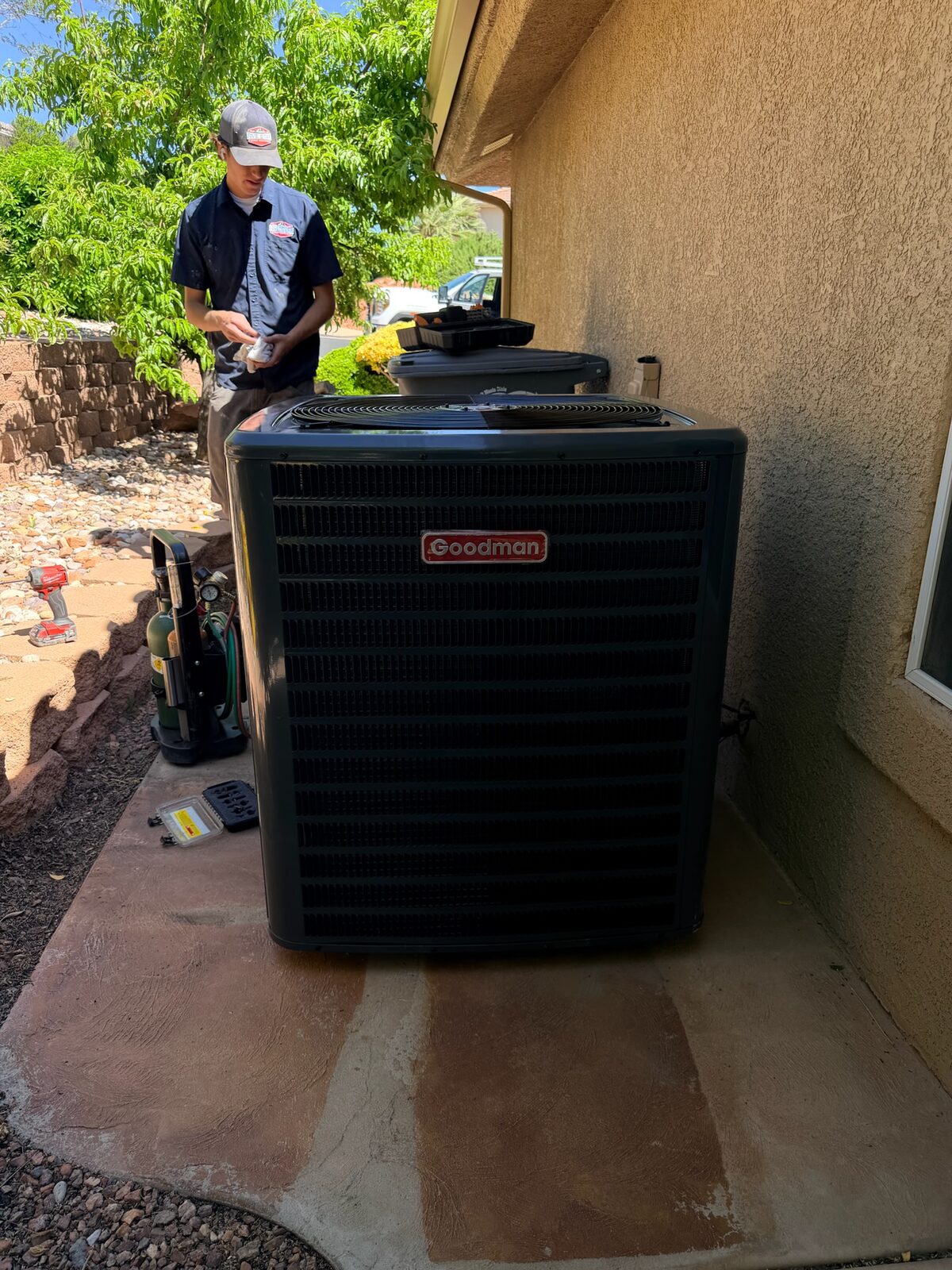
If you live in the Las Vegas valley, you know the exact moment summer arrives: the first afternoon the thermometer pushes past 110° and your AC, which seemed fine in May, suddenly can’t pull the house below 80. By July it’s relentless — and so are the breakdowns.
This guide is here to actually help, not just sell you a service call. We’ll cover why air conditioners fail specifically in the Mojave heat, what you can safely check yourself in five minutes, and how to tell a quick fix from a real repair.
We’re Five Star Mechanical, serving Las Vegas, Henderson, and the surrounding valley. If you’d rather just talk to someone, call 702-550-0380. Otherwise, read on.
Why air conditioners break down in Las Vegas
The Mojave Desert is about as hard on cooling equipment as any climate in the country. Three reasons stand out.
The heat load is extreme and around-the-clock
When it’s 112° outside and you want 75° inside, your system fights a 37-degree gap for hours — and in Las Vegas, the overnight low in July often stays in the 80s, so the unit never really gets a break. A marginal capacitor, a slightly low refrigerant charge, or a tired compressor that would coast for years in a mild climate gets exposed fast here. That’s why failures spike with the first stretch of 110°+ days. The weak parts were always weak; the desert just finds them first.
Valley dust and caliche choke airflow
Anyone who’s wiped down a patio table in Las Vegas knows how fast the fine desert dust accumulates. It packs into air filters far quicker than the “every 90 days” sticker assumes, and it coats the outdoor condenser coil. A clogged filter or a dirty condenser makes the system work harder for less cooling — higher power bills and a shorter equipment life. A lot of “my AC is broken” calls are really “my AC is suffocating.”
Hard water and rooftop units add wear
Las Vegas water is hard, and the mineral content takes a toll on anything that moves water, including condensate drains that can clog and trip a safety switch. And because so many valley homes run rooftop package units, sun exposure and heat soak are even more punishing than on a ground-level condenser.
None of this is meant to scare you — the point is that in this climate, regular attention matters more than the manufacturer’s generic schedule suggests, and many summer breakdowns are preventable.
Check these five things before you call anyone
Run through this list first. Sometimes the fix costs nothing, and we’d rather you know that than pay for a trip you didn’t need.
- Check the thermostat. Set to Cool, target a few degrees below room temperature, and check the batteries. This solves more “broken” AC calls than you’d think.
- Look at your air filter. In valley dust a filter can clog in weeks during summer. A badly clogged filter chokes airflow enough to make the system struggle — or freeze into a block of ice. If it’s gray and packed, swap it and wait an hour.
- Clear the outdoor unit (or check the roof unit’s surroundings). Clear dust, debris, and anything blocking airflow around the condenser. It needs open airflow on all sides to dump heat.
- Check your breaker. AC systems pull heavy current and a tripped breaker is common. Reset it once. If it trips again immediately, stop — that’s an electrical issue for a pro.
- Look for ice or water. Ice on the refrigerant lines means turn the system off and let it thaw fully before running it again. Pooling water near the indoor unit can mean a clogged condensate drain.
If you’ve done all five and the house still won’t cool, it’s time for a technician.
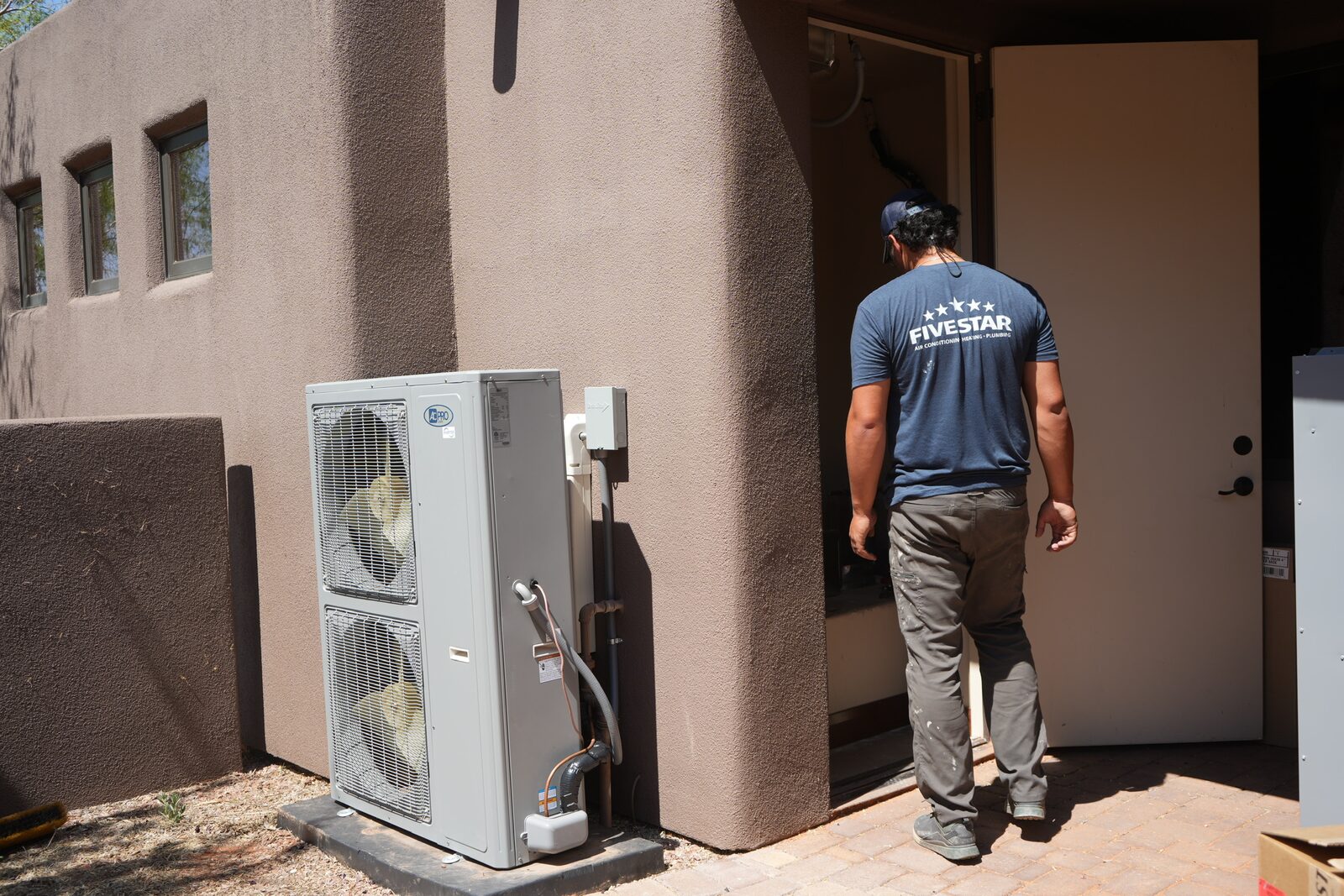
An inverter system going in — modern equipment handles the Mojave heat load far better than older single-stage units.
When it’s a real repair (and what’s usually behind it)
- A failed capacitor. One of the most common summer failures — a small, cheap part that takes the brunt of heat stress. Symptom: the outdoor fan won’t start, or you hear a humming click.
- Low refrigerant from a leak. If cooling slowly got weaker, suspect a leak. Refrigerant isn’t “used up” — if it’s low, it’s leaking, and topping it off without finding the leak wastes money.
- A frozen coil from airflow problems. Usually traces back to a dirty filter or a low charge.
- Compressor or motor issues. The bigger-ticket items, more common on aging systems pushed hard by the desert heat.
A good technician’s job is to diagnose honestly — to tell you when it’s a $200 capacitor versus when it’s time to talk replacement. You should always get a clear explanation before any work happens.
Why valley homeowners call Five Star Mechanical
When you call 702-550-0380, you reach a licensed Las Vegas HVAC and plumbing company (NV HVAC #93578, NV Plumbing #93610) that knows this climate and these homes. We install and service every major brand — Bryant, Daikin, Lennox, Goodman, Carrier and more — so our recommendation is never about pushing one manufacturer.
Straight diagnosis, an upfront explanation before we touch anything, and honest repair-versus-replace guidance when a system is on the edge.
AC not keeping up with the heat?
Don’t let a hot afternoon turn into a miserable night.
Call 702-550-0380